The Importance of Regular Oil Analysis
Lubricating oil does more than reduce friction between moving components. It also carries valuable information about the condition of the equipment and the health of the lubricant itself. Regular oil analysis can turn this information into actionable maintenance decisions before a small issue develops into an expensive failure.
For industrial machinery, hydraulic systems, compressors, gearboxes, engines, and other critical equipment, oil analysis is an important part of a proactive maintenance strategy.
What Is Oil Analysis?
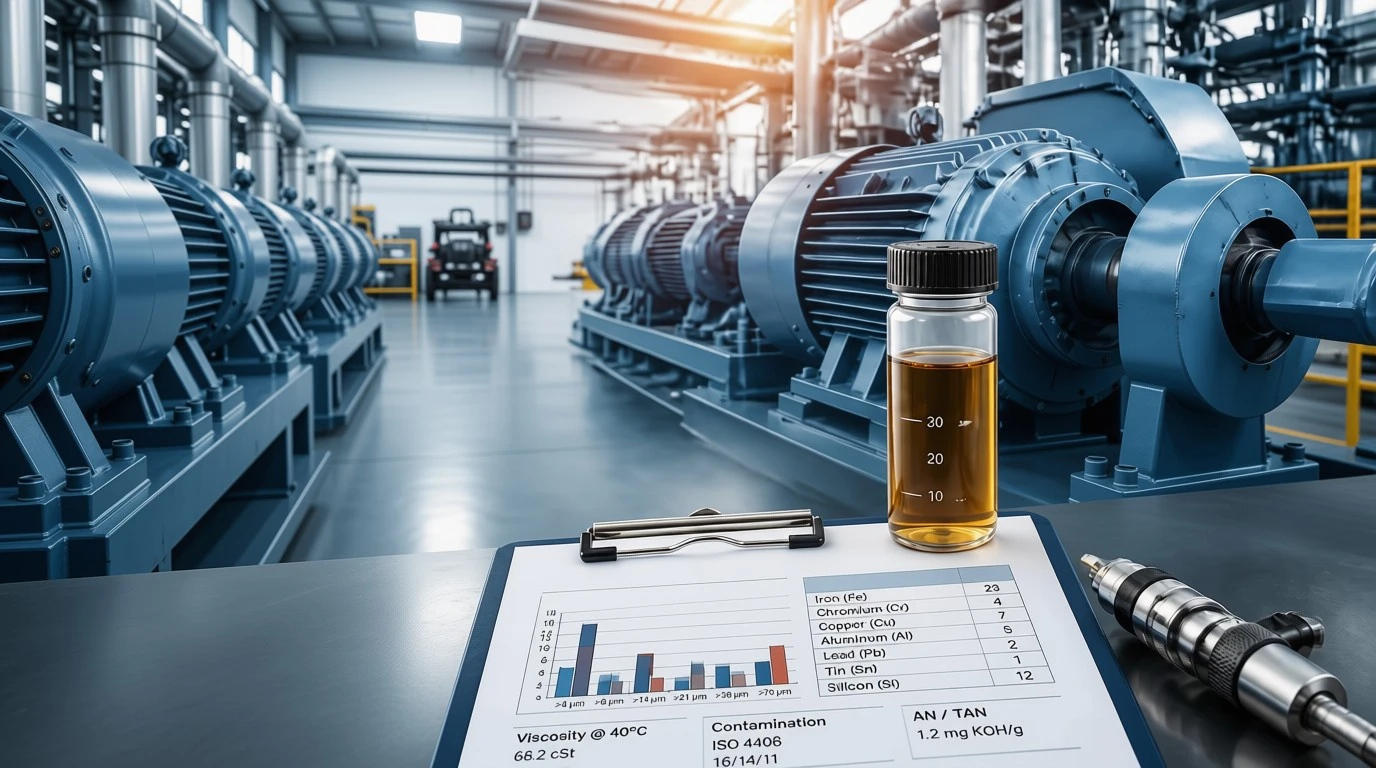
Oil analysis is the process of examining a lubricant sample to identify changes in its physical and chemical condition, as well as signs of equipment wear or contamination.
A typical analysis may evaluate:
- Viscosity
- Water contamination
- Particle contamination
- Wear metals
- Oxidation
- Additive condition
- Fuel or coolant contamination where applicable
- Overall lubricant condition
The results can help maintenance teams understand what is happening inside equipment without immediately dismantling major components.
Detect Wear Before Failure
One of the biggest benefits of oil analysis is early detection of abnormal wear.
Metal particles and other wear debris can indicate developing problems in components such as pumps, bearings, gears, cylinders, and valves. Monitoring these changes over time can help maintenance teams identify unusual wear patterns before they lead to major equipment damage.
Identify Contamination
Contamination is a common cause of lubricant and equipment failure. Dirt, dust, water, process chemicals, and other foreign materials can enter a lubrication system and reduce oil performance.
Regular analysis can reveal contamination levels and help determine whether improvements are needed in filtration, storage, handling, seals, or maintenance procedures.
Monitor Oil Condition
Lubricants gradually change during service. Heat, pressure, oxidation, contamination, and mechanical stress can cause the oil and its additives to deteriorate.
Oil analysis helps determine whether the lubricant is still suitable for continued operation or whether corrective action is required.
Instead of changing oil purely according to a fixed calendar schedule, condition-based monitoring can help organizations make more informed decisions.
Reduce Unplanned Downtime
Unexpected equipment failure can result in production delays, emergency repairs, replacement parts, and significant operational costs.
Regular oil analysis provides an additional layer of early-warning protection. When abnormal trends are identified, maintenance teams can investigate the equipment during planned downtime rather than waiting for a sudden breakdown.
Build a Trend, Not Just a Single Report
A single oil sample can provide useful information, but the real value of oil analysis comes from monitoring results over time.
By comparing historical samples, maintenance teams can identify trends such as increasing wear metals, rising viscosity, growing contamination, or declining lubricant performance.
Trend analysis makes it easier to distinguish normal changes from developing problems.
How Often Should Oil Be Analyzed?
There is no universal sampling interval for every machine. The appropriate frequency depends on equipment criticality, operating conditions, lubricant type, contamination risk, and manufacturer recommendations.
Critical equipment and systems operating under severe conditions may require more frequent monitoring than less demanding applications.
Final Thoughts
Regular oil analysis is more than a laboratory test—it is a practical tool for predictive maintenance. By monitoring lubricant condition, contamination, and equipment wear, businesses can make better maintenance decisions, reduce unexpected failures, and improve equipment reliability.
When you monitor the oil, you gain valuable insight into what is happening inside the machine.